
How to choose a mortuary cold chamber for storing deceased persons: key specifications
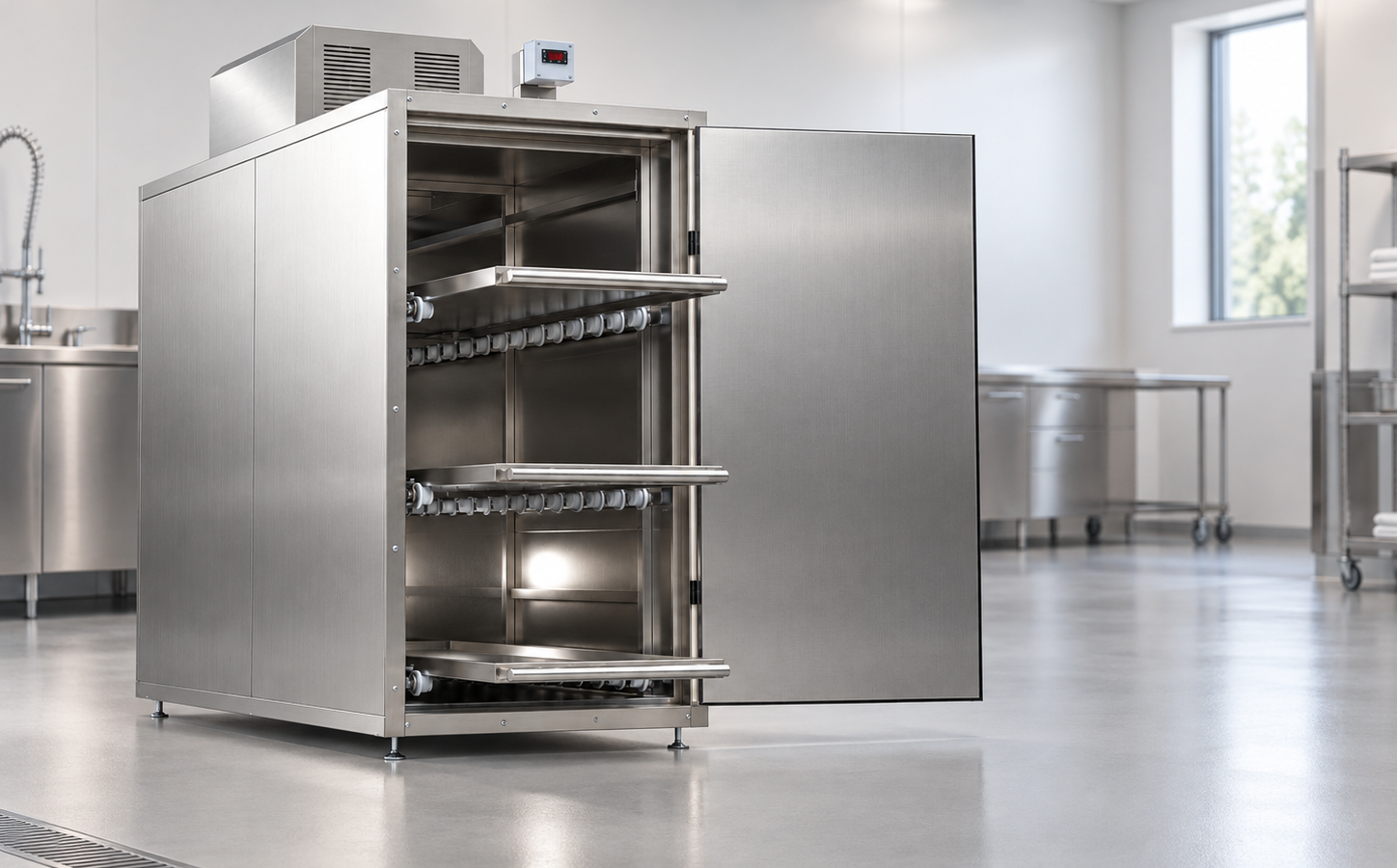
Choosing a cold chamber for storing deceased bodies should begin well before comparing the dimensions of several models. Capacity, loading method, room layout, the trays used, compatibility with trolleys and the ability to keep the equipment clean all have a direct impact on day-to-day operations. A well-chosen cold chamber should form a single functional system with the other equipment in a mortuary, crematorium or funeral home. As a Polish manufacturer of stainless steel equipment, POLNIER considers not only the construction of the product itself but also how it is used every day. This guide covers the main points to establish before ordering a cold chamber.
1. First, define the purpose of the cold chamber
The first step is to determine where and how the equipment will be used. The requirements of a small funeral home will differ from those of a larger mortuary or a crematorium’s facilities.
Establish the expected number of bodies to be stored, how often loading and unloading will take place, the space available and how bodies will be transported between areas of the facility.
At this stage, it is useful to consider the entire workflow rather than a single piece of equipment: transport trolley – tray – cold chamber – preparation station.
2. Cold chamber capacity should match actual needs
One of the basic specifications is the number of storage positions. Maximum capacity alone, however, should not be the only selection criterion.
A larger chamber also requires more space and a particular loading arrangement. Before making a choice, consider the facility’s typical workload, any periodic increases in demand and the possibility of expanding the equipment later.
An oversized unit may take up space unnecessarily, while insufficient capacity will soon become an operational constraint.
3. Chamber dimensions involve more than width, height and depth
When planning where to place a cold chamber, allow for the space needed to operate it. Clear space in front of the unit is particularly important: it must be possible to position and manoeuvre a trolley and to slide a tray in and out safely.
Also consider:
- the width of doors and access routes leading to the room,
- the turning radius of the trolleys used,
- the position of other equipment and furniture,
- the access required for servicing,
- the installation requirements for the specific model.
Before ordering, provide the manufacturer with information about the room as well as the required chamber dimensions.
4. The loading method affects everyday ergonomics
In a professional facility, a chamber may be accessed many times a day. The way trays are inserted and removed therefore has a significant effect on staff ergonomics.
Check the height of each level, the construction of the guides or support systems, and how the unit works with the trolley in use.
The better the components fit together, the fewer additional handling steps are needed when moving a body.
5. Trays, guides and trolleys should form a compatible system
This is one point to check before purchasing. A body storage tray is not entirely independent of the chamber and trolley.
If the equipment is to work as a single system, check the tray dimensions, how the trays are supported, the transport height and the trolley construction, among other factors.
It is advisable to select the key components so that equipment does not have to be transferred manually between incompatible systems.
POLNIER also offers stainless steel trays and accessories and body trolleys, allowing compatibility between these components to be considered from the selection stage.
6. Material and construction matter for hygiene
Equipment in a mortuary or funeral home is cleaned and disinfected regularly. The materials used and the finish of surfaces accessible to staff are therefore particularly important.
Stainless steel is widely used in professional equipment because of its durability, surface resistance and suitability for regular washing. This does not mean, however, that every component described as “stainless” is identical.
The material grade, surface finish, construction of joints and compatibility of cleaning chemicals with the material all matter.
7. Refrigeration specifications must be considered alongside operating conditions
When reviewing a chamber’s specification, check how the temperature is regulated, the controls, the air circulation arrangements and the requirements for installation and the unit’s surroundings.
Temperature settings should not be chosen solely on the basis of general information found online. The appropriate operating parameters should be determined by the equipment specification, the procedures in place at the facility and the recommendations for the particular application.
Before purchasing, also establish where components requiring service access are located and what conditions the room must meet.
8. Service access is part of good room planning
A chamber may fit perfectly into a recess yet be positioned in a way that makes subsequent servicing difficult. The required service clearance should therefore be planned before installation.
This also applies to the ability to clean freely around the unit and to access surfaces that may become soiled during everyday use.
9. Ease of cleaning should be a purchasing criterion
When assessing the construction, consider the unit from the perspective of the person who will clean it regularly. Surfaces should be accessible, with hard-to-clean areas kept to a minimum.
Use cleaning and disinfecting products suitable for the materials used in the unit, and follow the instructions provided by the equipment and chemical manufacturers.
Using unsuitable, aggressive products may, over time, affect the appearance and, in some conditions, the resistance of stainless steel surfaces.
10. What information should you prepare before enquiring about a cold chamber?
A well-prepared enquiry speeds up the selection of a suitable solution. Provide the manufacturer with at least:
- the required number of storage positions,
- the dimensions of the available room,
- the preferred loading method,
- details of existing trays and trolleys, if they are to remain in use,
- any restrictions relating to door widths and transporting the unit to its installation location,
- the intended use,
- any important construction or additional equipment requirements.
This information makes it possible to discuss a specific solution rather than selecting a unit solely on the basis of a photograph or its external dimensions.
11. Why does direct contact with the manufacturer matter?
With specialist equipment, the opportunity to discuss its intended use directly with the manufacturer is particularly important. It helps establish how the chamber will work with the other equipment and which specifications need to be considered before production.
POLNIER is a Polish manufacturer of stainless steel equipment for mortuaries, crematoria and funeral homes. This means discussions about product selection can address its construction and actual operating conditions, rather than just a catalogue reference.
See the available POLNIER cold chambers.
12. Frequently asked questions about cold chambers
How do I choose the capacity of a cold chamber?
Consider the typical number of bodies stored, periodic increases in demand, the workflow and the space available at the facility. The largest possible chamber is not always the most functional solution.
Will any tray fit any cold chamber?
No. Before purchasing, check the dimensions, method of support and guide system construction. If existing trays are to be used, provide the manufacturer with their exact specifications.
Should the trolley be matched to the chamber?
Yes. Compatibility between the heights, tray and transport mechanism makes everyday loading and unloading considerably easier.
What temperature should the chamber maintain?
The operating parameters should be established on the basis of the equipment specification, its intended use and the procedures in place at the facility. Avoid copying settings from unrelated units of a different design.
What should I check before installation?
Check the dimensions of the room and access routes, whether the unit can be brought in, the required operating and service clearances, the necessary utilities and how the trolley will be manoeuvred in front of the chamber.
The cold chamber as part of a complete equipment system
The best results come from selecting the chamber together with the components that will work with it. Trays, trolleys, the loading system and the room layout should be considered as a whole.
If you are planning equipment for a mortuary, crematorium or funeral home, contact POLNIER. We will help establish the specifications needed to prepare a suitable solution.


